
The 1980s

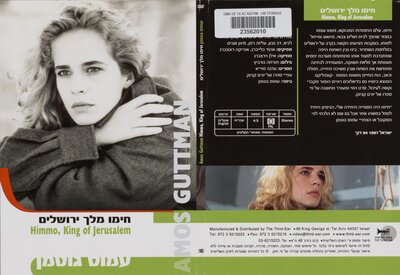
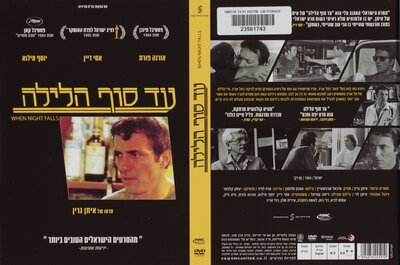
After the shock of 1973 Yom Kippur war, and well into the 1980s, the Israeli cinema has evolved to be more critical, questioning social-political processes that took place in society and its institutions. Noa at seventeen (Yitshhak Tsepel Yeshurun, 1982) and Late summer blues (Renen Schorr, 1987), both coming-of-age films, confront their critical thinking protagonists with an oppressive society. Paratroopers (Judd Ne’eman, 1977), created a few years after the 1973 Yom Kippur war, was the first film that “critiqued and deconstructed Israeli male military manhood.”[1] Films such Soldier of the night (Dan Wolman, 1984), When night falls (Eitan Green, 1984), and Himmo, king of Jerusalem (Amos Guttman, 1987) present a confused and defeated image of the Israeli soldier, who does not fit into the normative model of masculinity. Coined by Gertz (1993) as “the cinema of the strange and the different,”[2] the cinematic landscape of that time recognized under-represented groups such as Palestinians, women, holocaust survivors, new immigrants, queer people, and outcasts. The films of the “strange and different” dissected the Israeli society into sub-cultures and thus depicted the diverse fragments that made the tapestry of Israeli identity, criticizing the national, conformist hegemony.
Up until the late 1970s, representation of queer characters was absent from Israeli cinema. Michal Bat-Adam’s Moments (1979) was the first to show a lesbian love affair.[3] Dan Wolman’s Hide and seek (1980) followed with a gay protagonist, a teacher who has romantic relationships with yet a different ‘other’ – an Arab young man. Amos Guttman was the first to make homosexuality the main theme of his works. Based on his own lived experiences, in his groundbreaking film Drifting (1983) the protagonist has two obsessions in his life: men and cinema. While most of these early representations were saturated with distress and otherness, they opened the door to more positive portrayal of queer life in the late 1990s and later on.[4]
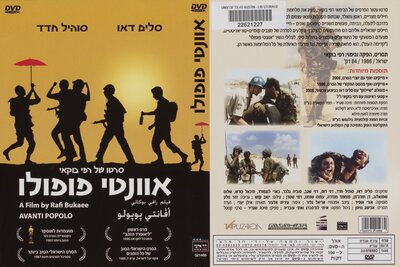

The 1980s also brought with them the “return of therepressed”[5] – an unusual representation of the Palestinian/Arab as both the ‘other’ as well as one with equal agency as Israeli/Jewish protagonists. One of the most prominent films of this “Palestinian wave”[6] is Avanti Popolo (Rafi Bukaee, 1986). It not only presents the defeated Egyptian enemy’s army after the 1967 Six-Day War, but the Egyptian soldiers’ roles are played by [Israeli] Palestinian actors – a subversive position that ‘elevated’ the Palestinian presence in the Israeli sphere onto the same level of the Israeli one. Some additional films in this ‘wave’ include Hamsin (DanielWachsmann, 1982), Beyond the walls (Uri Barabash, 1984), A very narrow bridge (Nissim Dayan, 1985), The smile of the lamb (Shim’on Dotan, 1986), and Cup final (Eran Riklis, 1991).
[1] Yosef, Raz. Beyond Flesh : Queer Masculinities and Nationalism in Israeli Cinema, Rutgers University Press, New Brunswick, N.J., 2004, 57 [eBook].
[2] Gertz, Nurith. Sipur meha-seraṭim : siporet Yiśreʼelit ṿe-ʻibudeha la-ḳolnoʻa. Universitah ha-petuhah, Tel Aviv, 1993, 188-189 [Hebrew].
[3] When it was released, the Israeli Council for Review of Films and Theater Plays had ordered to cut out 30 seconds of ‘provocative content,’ namely part of a ménage à trois with the boyfriend of one of the protagonists. The full uncut version was screened in Israel only in 2013.
[4] Paratroopers (Judd Ne’eman, 1977) brought to the surface homoerotic tensions among its protagonists in a military base setting, and Hamsin (Daniel Wachsmann, 1982) shows a very subtle sexual attraction between two men, a Jew and an Arab. Yet, none of these protagonists openly identifies as homosexual.
[5] Shohat, Ella. Israeli Cinema : East/West and the Politics of Representation, Tauris, 2010, 215-247 [eBook].
[6] Ibid.