
Reactionary Monarchy in the Age of Revolution
As revolutions in the United States, France, and Haiti challenged fixed understandings of sovereignty in the late 18th-century, anxieties over the need to re-assert royal authority emerged in both hemispheres. In 1779, Carlos III of Spain declared war on Great Britain in a printed pamphlet, calling for support from his Spanish American subjects. He invoked his royal sovereignty despite supporting a colonial revolution against Britain. Just a decade later, Louis XVI of France, also from the House of Bourbon, would be overthrown and then executed. His last words were memorialized in a provocative silhouette print, warning Spanish colonial elites of the dangers of social upheaval and revolutionary violence.
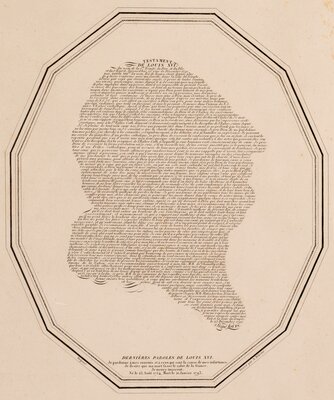
Louis XVI: Testament in a Silhouette Profile
Created in France and engraved by Alphonse Pelicier, the undated typographic portrait Testament de Louis XVI symbolizes the French king’s execution by guillotine while transforming his final words into a powerful visual statement. The print forms the silhouette of Louis XVI’s severed head from the text of his last testament, portraying him as a forgiving and faithful monarch. More than a memorial, it functions as a striking piece of monarchist propaganda, the message of which extended far beyond Paris. As historian Jaime E. Rodríguez O. observes, the revolutionary violence in France profoundly influenced how elites in New Spain perceived monarchy and feared social upheaval. In this context, the portrait served as a political warning to colonial elites who sought independence yet dreaded the radical social disorder unleashed by revolution, reinforcing loyalty to the established order.
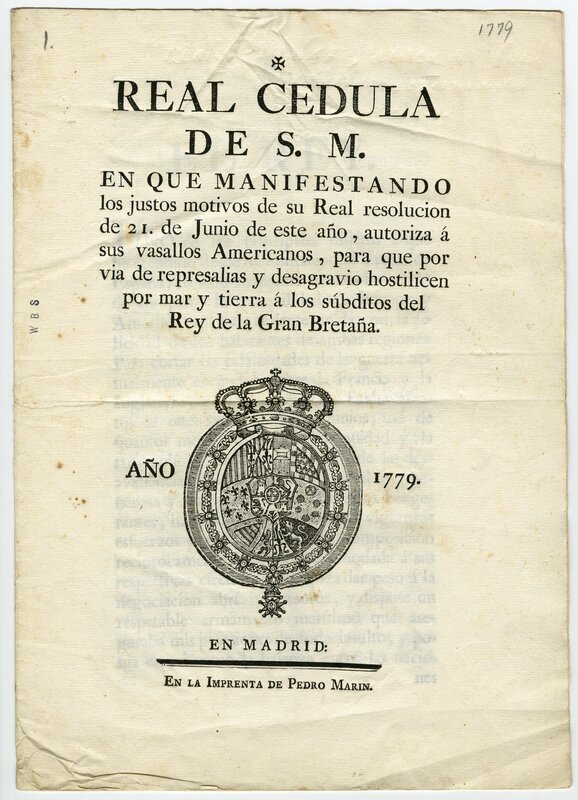
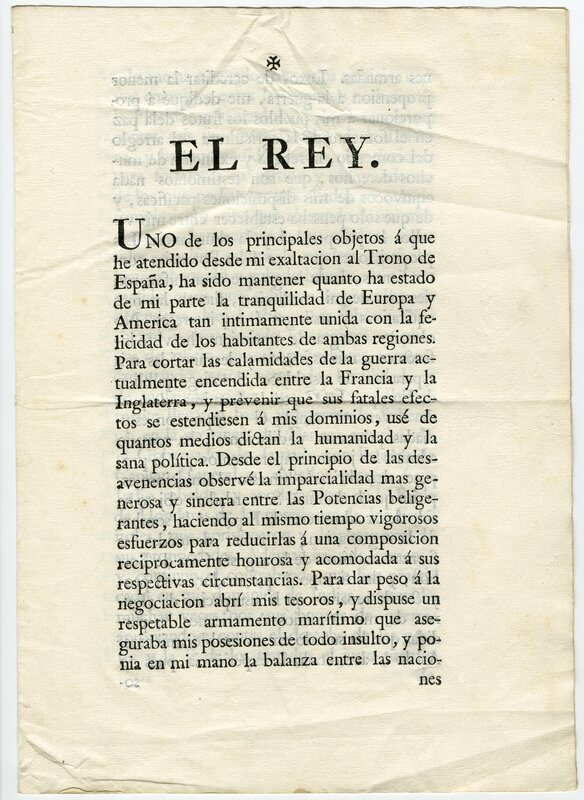
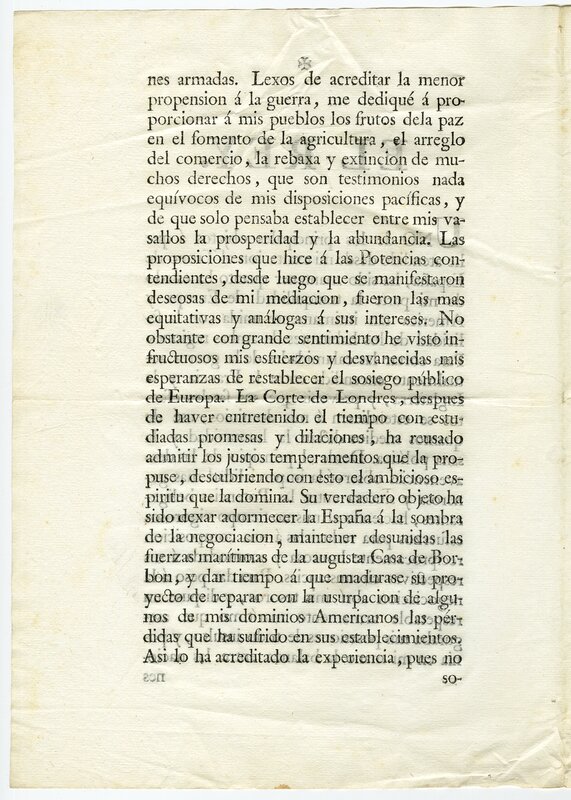
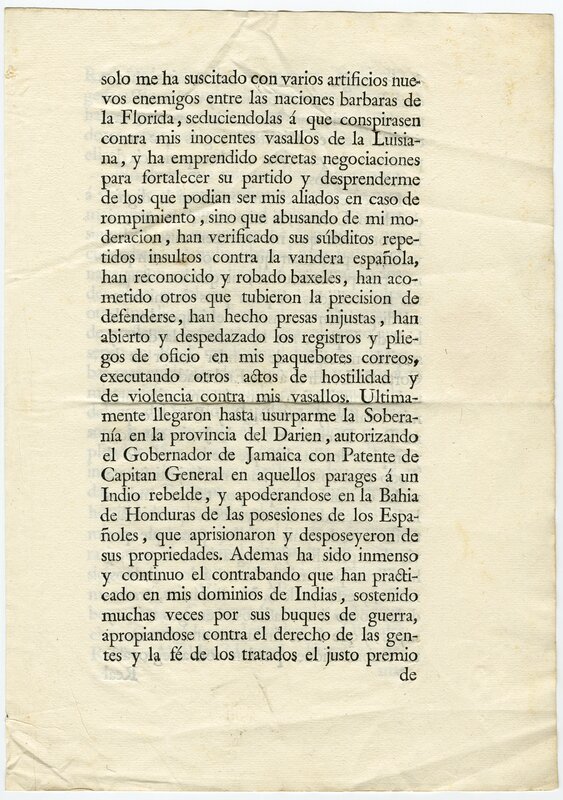
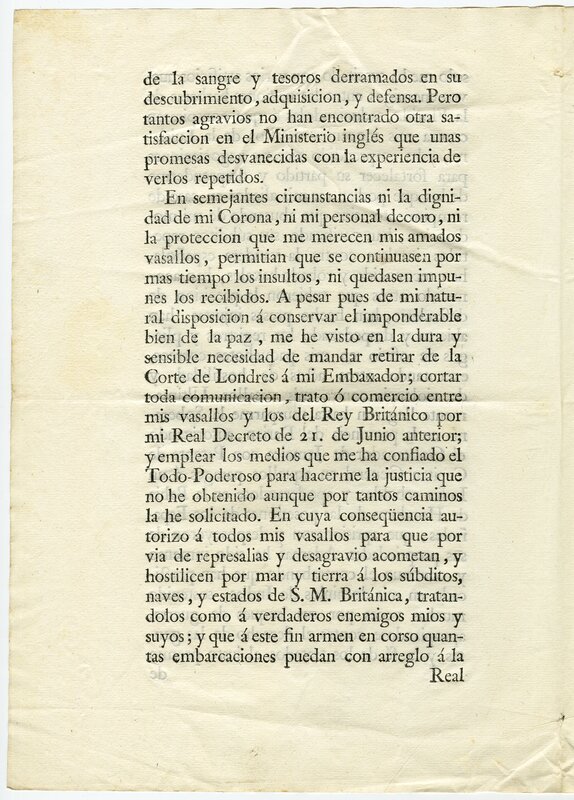
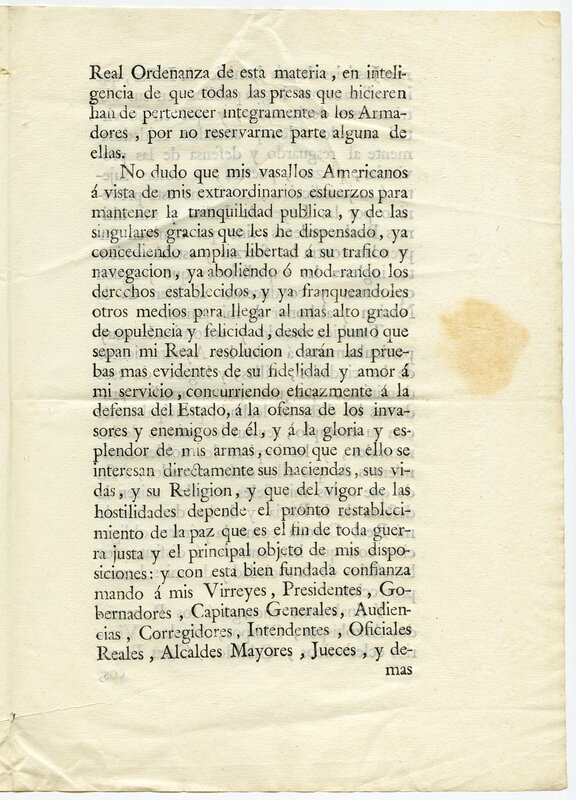
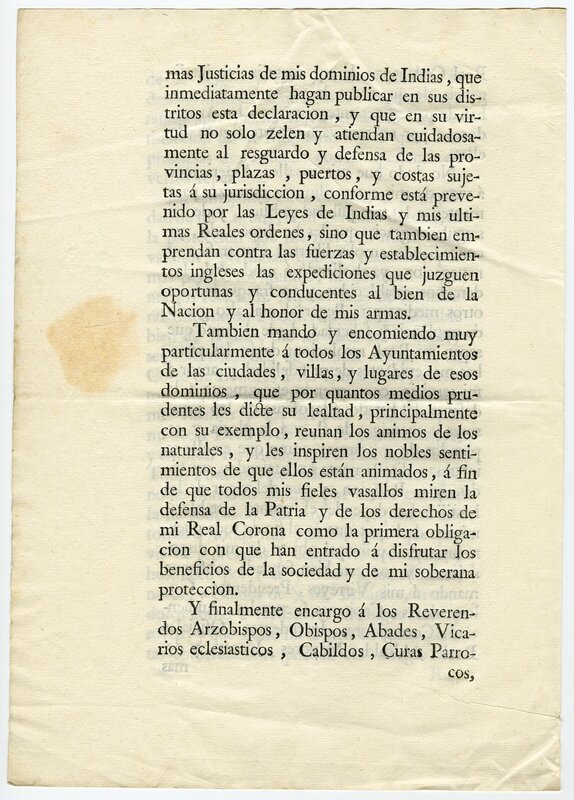
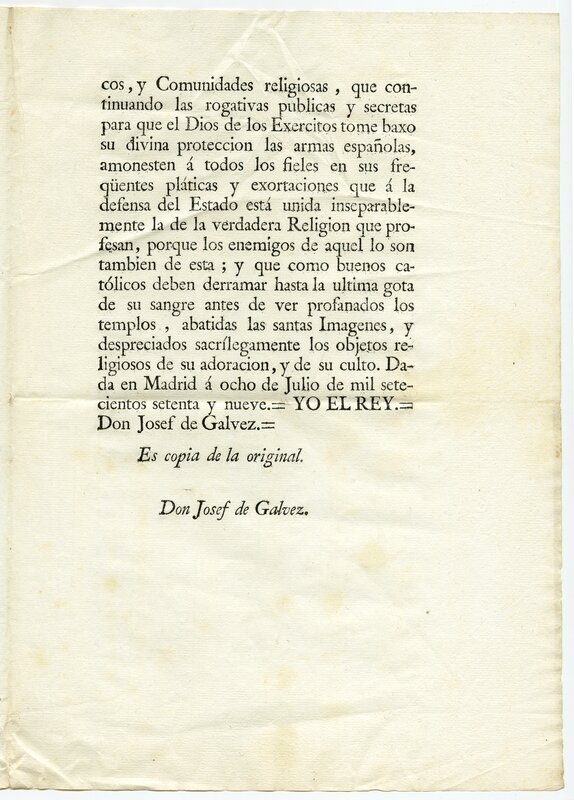
Real Cedula de su Majestad, 1779
Carlos III of Spain has announced war with Great Britain in 1779 on this large, high-contrast, legible, pamphlet printed in Madrid. He has authorized subjects of Spain in the Americas to attack British vessels, among other hostilities. Why does the king omit mention of the ongoing war for independence in North America between the Thirteen Colonies and the British crown?
Instead, he frames it as aiding France as a united House of Bourbon against the injurious British, who are "seizing and plundering vessels, attacking mail packets, and committing open acts of hostility", while he upholds tranquility, using Enlightened monarch rhetoric and conventional appeals to the Catholic faith. The king is concentrated on reminding readers of his magnanimous treatment of the Americans in the hopes they will loyally join in the effort against the British.
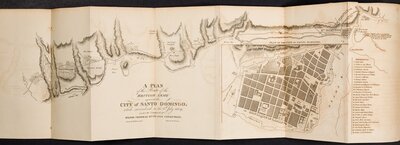
A Plan of the Route of the British Army against the City of Santo Domingo
This map of Santo Domingo is bound within William Walton’s 1810 book about the island of Hispaniola in the wake of the Haitian Revolution. Laid out to be unfolded across seven pages, prominently labeled “A Plan of the Route of the British Army against the City of Santo Domingo,” the map details the area from the very western side of the Santo Domingo, cutting Haiti off, west towards the center of Santo Domingo. Walton was aboard the British expedition that briefly overtook Santo Domingo in 1809. Starting with the neighboring Haitian Revolution in 1791, Santo Domingo went from Spanish, to French with Haitian leaders intervening, to British control in 1809. By the time this map was printed, the British already ceded Santo Domingo back to Spanish control in August of 1809. This map symbolizes the fluctuation of this revolutionary time period when official control over territory was rapidly changing and imperial powers vied to reinstate monarchical control in reaction to a major revolution.