
Revolutionary Ideas of an Exiled Friar
José Servando Teresa de Mier Noriega y Guerra (1765-1827) was a Catholic priest exiled from Veracruz for “dangerous” political views. The revolutionary ideas of De Mier reveal the sociopolitical context of Spanish America during the period of Independence. Through sonnets, speeches, and letters authored by De Mier, we see how he spread ideas that challenged censorship and criticized the failures of the Spanish government. Accused of being a liar and an eccentric on the one hand, and a picaresque antihero on the other, De Mier stands out as a key figure for motivating his community to denounce “el mal gobierno,” or bad government.
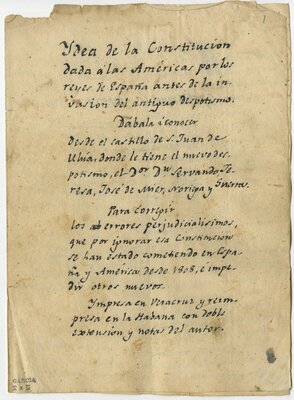
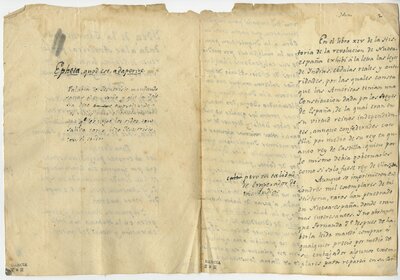
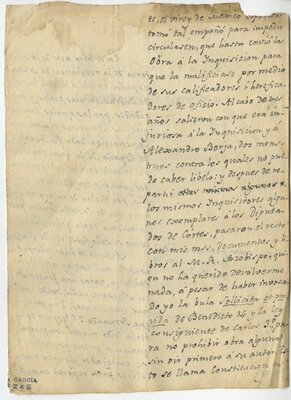
"Idea de la constitución dada a las Américas por los reyes de España antes de la invasión del antiguo despotismo"
Fryer José Servando Teresa de Mier‘s 1811 work titled “Idea de la Constitución dada a las Americas...,” is an aged manuscript handwritten with black ink, its jagged edges reflecting its age, and captures his revolutionary ideals. De Mier, a Mexican revolutionary orator and writer known for anti-Spanish colonialism ideas in early 19th-century Spanish America, faced censorship by the Viceroy of Mexico, who deemed his writing dangerous for challenging the colonial hierarchy. Although many historians portrayed De Mier as a liar making outlandish claims, Marie-Cécile Benassy-Berling, in her article "Defensa de Fray Servando Teresa de Mier," argues that his writing was inspirational and influenced modern Mexican political thought, even when such ideals were politically dangerous. The fragile state of the physical paper on which this manuscript was written evokes the risk and vulnerability of expressing revolutionary ideas. De Mier’s writings reflect the broader ideological struggles that shaped the revolutionary movements of Spanish America in the 19th century.
Correspondence of De Mier
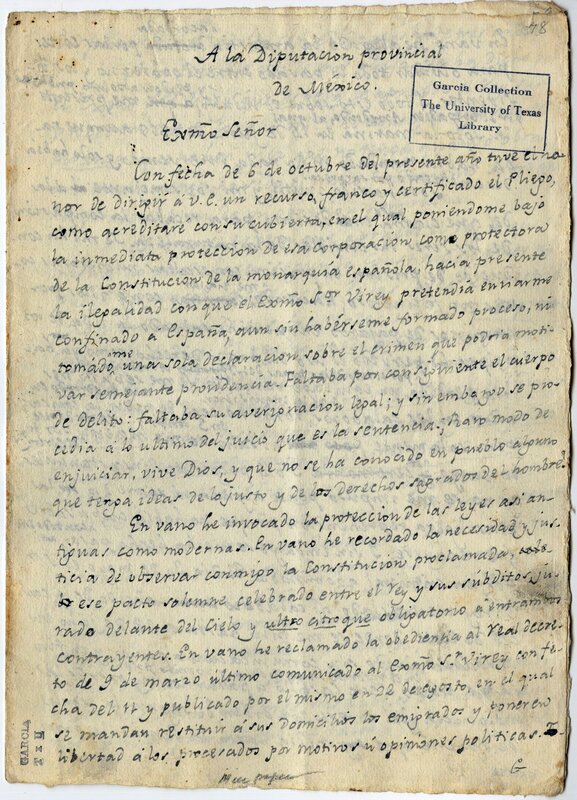
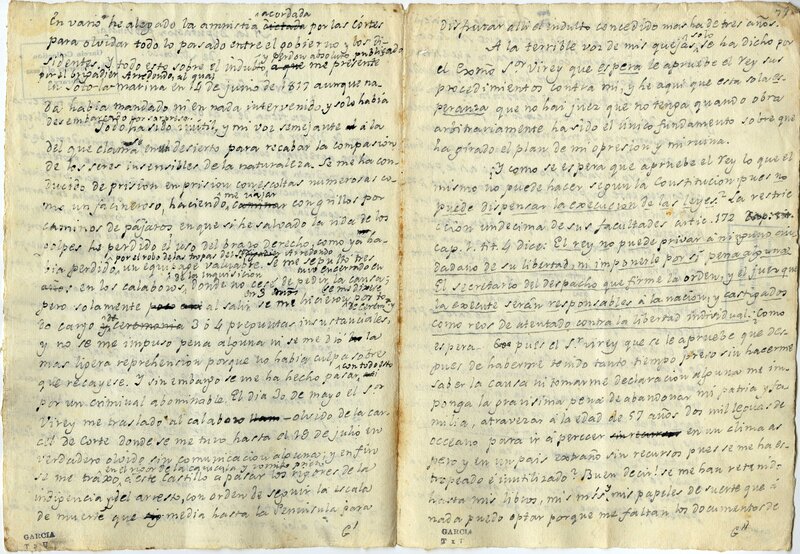
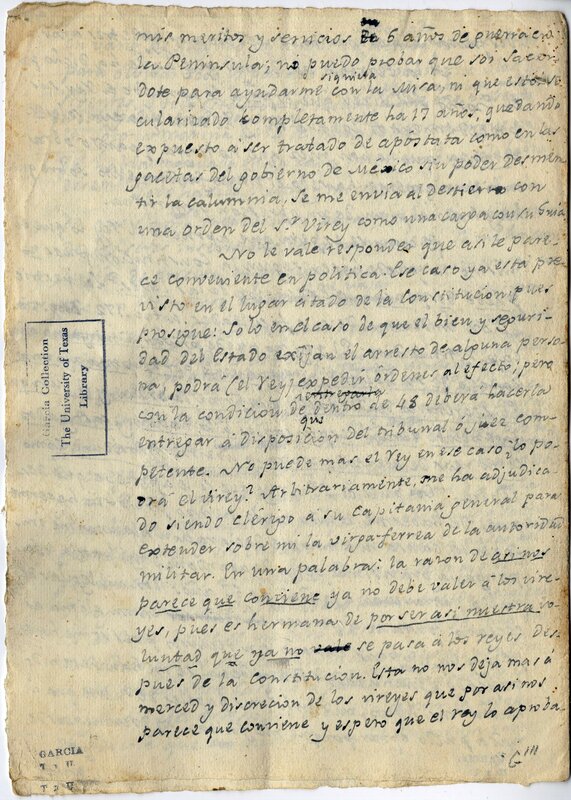
From Fryer José Servando Teresa de Mier’s frayed and aging handwritten letters and manuscripts comes a collection to the Provincial Council of Mexico through the 1820’s which capture his frustration about the ways in which the government was functioning in Mexico. Throughout these letters, his sharp criticism of Mexico’s continued colonial practices after independence is revealed as he turns from religious leader to political dissident. Within this specific letter, Mier condemns the contradictions between constitutional promise and the authoritarian governance he witnesses, urging for reason and equality. Mier’s writing was the first glimpse into revolutionary ideas when it was risky to openly critique the new nation’s leadership.
"Soneto"
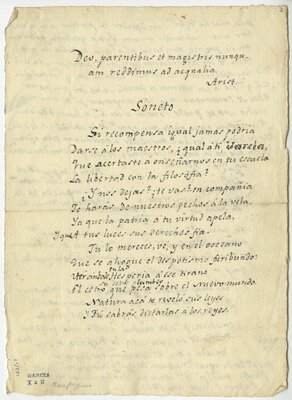
Written at the tail end of José Servando Teresa de Mier’s notes is an unpublished Spanish sonnet. Scholars like Ottmar Ette and Susan Johnson describe De Mier as a picaresque Catholic priest who frequently asserted his distaste against the monarchy, even if it got him into trouble. Written during the summer of 1822, this sonnet conveys ideas of independence and desire to separate from the monarchy. By describing Spain as a weight holding down the new world, he was a man who believed that in order for the Americas to progress, they had to immediately separate from Spain. Although some consider official documents to hold more weight over art, any piece, big or small, reflects how monumental events spurred the creative headspace of artists and revolutionaries alike.